
Hedgerows and Wood Pasture


Hedgerows and trees are more than historic features: they shelter livestock, hold soil, store carbon, and provide food and habitat for wildlife. We help re-establish hedgerows and create wood pasture in ways that work with grazing and can generate long-term income through Environmental land management schemes.
We weave hedgerows and scattered trees back into working farmland—following old field boundaries, planting new ones where they’re needed most. These living networks shelter livestock, slow flood water, and hold precious soil in place while creating corridors for wildlife to thrive, threading richer habitats through productive farmland. Creating hedgerows opens the opportunity for different grazing systems that improve soil and animal health.
Our wood pasture brings trees to steep slopes and bracken-covered ground where few other improvements take hold. Cattle and sheep still graze beneath the canopy while young oaks, rowans, and thorns establish themselves inside protective cages. The mix works together—hardy shrubs shield slower-growing trees until they can stand alone.
Case Studies
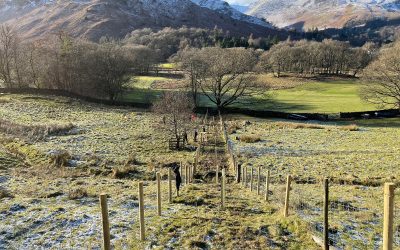
Catchment Scale, Hedgerow Planting and Wood Pasture Habitat
Multiple farm hedgerow planting and restoration of improved wood pasture habitat across the Ullswater and Matterdale area, involving 16 different farms and landowners.

Grisedale Valley Flood Resilience Project
The Grisedale Valley, a glacial U-shaped valley leading to Grisedale Tarn, faces increasing flood risks due to changing weather patterns. While popular with hikers and wild swimmers for its scenic beauty, the valley’s steep terrain and position below surrounding fells create vulnerability during heavy rainfall periods.

Ullswater Way Footpath Protection and Shoreline Restoration
The shoreline that runs from Pooley Bridge is part of the 22 mile Ullswater Way loop and is one of the highest traffic lakeside walks in our valley, as well as an essential footpath for access to holiday parks and campsites along the route.